
Podcast
Artificial Intelligence in Education: Generative AI as an Ally of Inclusion
An episode on how generative AI is changing education, widening inclusion and strengthening the human bond in the learning process.
By Rafael AnselmoNovember 25, 20253 min read
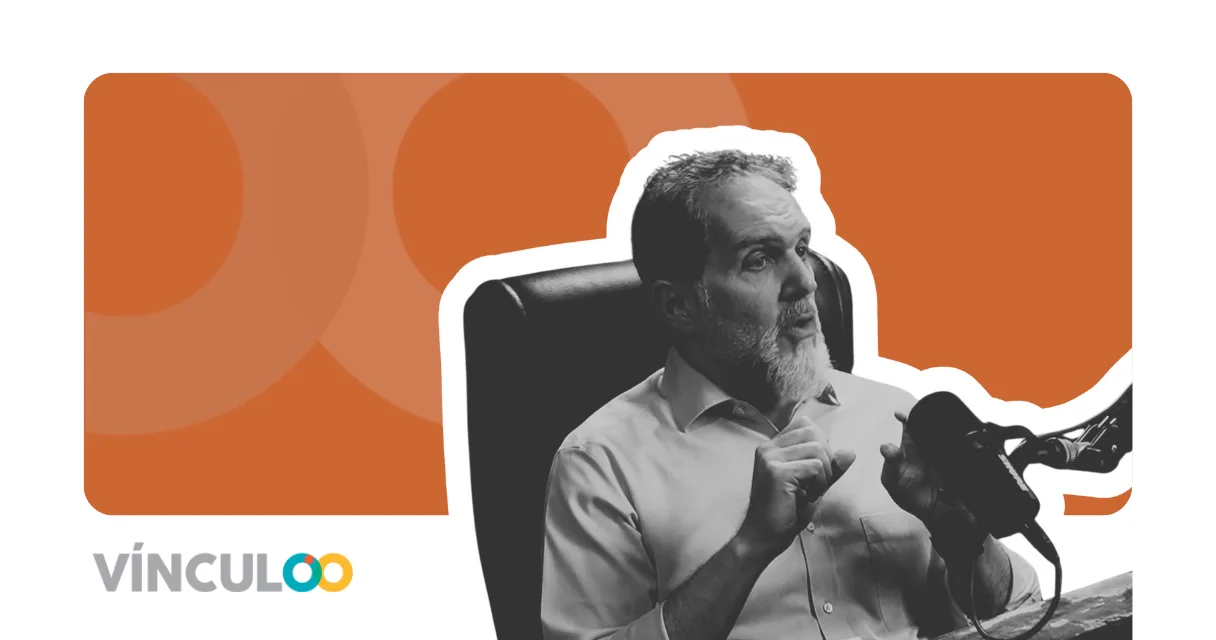
The third episode of the Vínculoo® Podcast brought an essential discussion about how generative Artificial Intelligence (AI) is transforming education, with George Stein, who holds a doctorate and a master's in Education and specializes in Learning Engineering. The conversation focused on the revolutionary potential of AI, but warned about the risk of losing sight of learning and of the human bond.
The risk of the “cognitive shortcut” in using AI
Generative AI going mainstream, with tools like ChatGPT, completely changed how students relate to knowledge. Today it is possible to produce texts, images, videos and activities in seconds.
But, according to George Stein, there is a central risk: confusing the task with the learning.
When a student outsources the cognitive effort to AI, that creates a “shortcut” that undermines the development of essential skills.
Research shows that 70% of high school students have already used AI to do assignments, often without the background knowledge or the critical thinking to judge what was generated.
The warning is simple:
Education has to shape a creative maker, not an automatic consumer of technology.
The irreplaceable role of the teacher: augmented intelligence
One of the biggest worries in schools is the fear that AI will replace the teacher.
The episode makes it clear: AI does not replace the educator.
Teaching, reading context, holding space for emotion and making meaning together are deeply human processes. No algorithm can take that over completely.
Instead of competing, AI should work as augmented intelligence: a tool that saves time, cuts manual work and lets the teacher concentrate on what really matters, which is pedagogical mediation and the bond with the student.
Just as Google or spreadsheets became essential years ago, knowing how to work with AI will be a natural part of teaching practice in the future, as long as it is used ethically and responsibly.
AI, inclusion and the PEI: new possibilities for special education
For special education, AI opens up a world of opportunity.
Students with disabilities often struggle to find content suited to their pace and to their specific skills.
The technology makes it possible to:
- adapt the curriculum deliberately
- adjust activities instantly
- genuinely personalize the learning path
The Vínculoo® platform, for example, uses AI to adapt content and generate accessible materials, including ready-made activities in Braille for students with visual impairments, which saves hours of work and widens access.
In the Individualized Education Plan (PEI, in Brazil), AI speeds up writing the document, improves the quality of the descriptions and gives more clarity to families, who often feel left without information about their children's progress.
Ethical and institutional challenges in using AI
Adopting AI requires schools to develop policies on ethics, governance and responsible use.
It is essential to make sure the generated content matches the institution's values, especially in faith-based schools, and that there are review and moderation processes in place.
The closing message of the episode reinforces that the change is inevitable.
Instead of fearing the technology, schools should learn to use AI to widen human richness, support student development and transform the learning process.
AI is not a magic fix. It is a powerful tool that, used with purpose, can put the student at the center and make education more accessible, more creative and more inclusive.
🎧 Watch the full episode
If you want to understand, in practical terms and without detours, how to organize inclusive processes, structure the PEI, support teachers and improve the relationship with families, this episode is for you.
👉 Click here to watch the Vínculoo® Podcast, Episode 3:
