Adapted resourceswithout changing the content.
Prompts broken into steps, adjusted reading, command in the spotlight, maths and science, Augmentative and Alternative Communication, audio and audio description, Braille and Libras: Vínculoo® adapts according to each student's functional characteristics and the support level of each one. The teacher gives the final adjustment.
- The command verb highlighted
- Prompt in steps, one per line
- Three options instead of four
- Readable formula and chart
1. Note that a square tile measures 12 cm along each side. Work out the area of this tile in square centimetres and tick, among the options below, the one matching the value you found.
2. A square plot of land has an area of 196 m². Knowing that the area of a square is the length of one side multiplied by itself, work out how long each side of this plot is and justify every step of your reasoning in the space below.
Figure 1 · square plot
3. The chart below shows how many books the class read in each term of the year. Looking at the data presented, how many more books did the class read in the 4th term compared with the 1st term?
Chart 1 · books read per term
1. Work out the area of the square tile with 12 cm sides.
- 1Multiply the side by itself: 12 × 12.
- 2Compare your result with the three options.
- 3Tick the option that matches your answer.
2. Find how long each side of the 196 m² plot is.
- 1Look for the number that, multiplied by itself, gives 196.
- 2Check the maths: 14 × 14 = 196.
- 3Write the measure with its unit: metres.
3. Compare the 1st and the 4th term on the chart.
- 1See how many books the class read in the 1st term.
- 2See how many books it read in the 4th term.
- 3Subtract the smaller from the larger: 24 − 12.

Drag the handle, or use the arrow keys
The same activity, in the format the student can reach.
The content is the same and so is the expectation. What changes is the path to it. The teacher chooses the activity and gives the final adjustment; everything is editable.
Prompts broken into steps
The run-on instruction becomes a guided structure: numbered steps, one per line, with the goal stated before the first one.
- the text and the two characters. Then your answer with a passage from the story.
Command in the spotlight
The verbs that say what to do are highlighted. For a student with ADHD, hunting for the command mid-sentence already burns the attention they needed to solve the task.
Tap a verb to see what it is asking for
Many people with dyslexia take longer to recognise words and to understand what they are reading. In many cases this difficulty shows up at school, when the student has to keep up with the class and read out loud in front of their classmates. The diagnosis is permanent, but the path to the text can change: the same content, presented another way, stops demanding effort that has nothing to do with what is being taught.
Adjusted reading
Typeface, size, line height and alignment change without rewriting a single word of the text. The reader decides how much to adjust.
Tap the adjustments to watch the text change
Maths and science
Maths and science typeset inside the platform: operations, fractions, roots and formulas come out formatted and, when the student needs it, the expression opens up into numbered steps.
Augmentative and Alternative Communication
The whole activity becomes a pictogram board for students who use Augmentative and Alternative Communication: each command gets a symbol with the word above it, and colour groups them by category.
Audio and audio description
What is written also arrives through the ear, and what is an image gains a description.
Braille
The activity text is converted into Braille, cell by cell, so a blind student reads the same exercise as the class, with their hands.
Libras (Brazilian Sign Language)
A virtual interpreter translates the activity into Libras without moving the sheet from the centre: the deaf student follows the same content, in their own language.

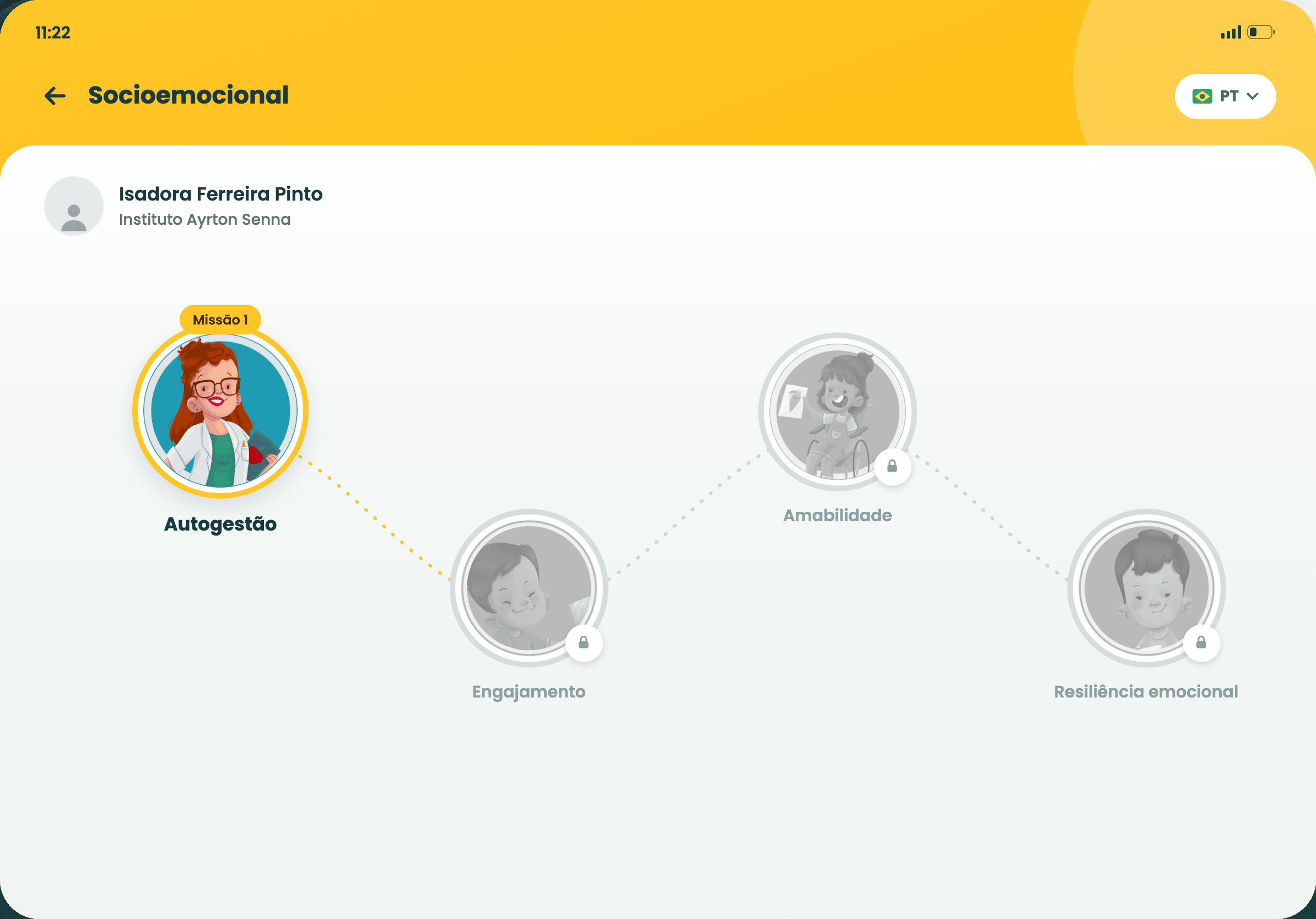
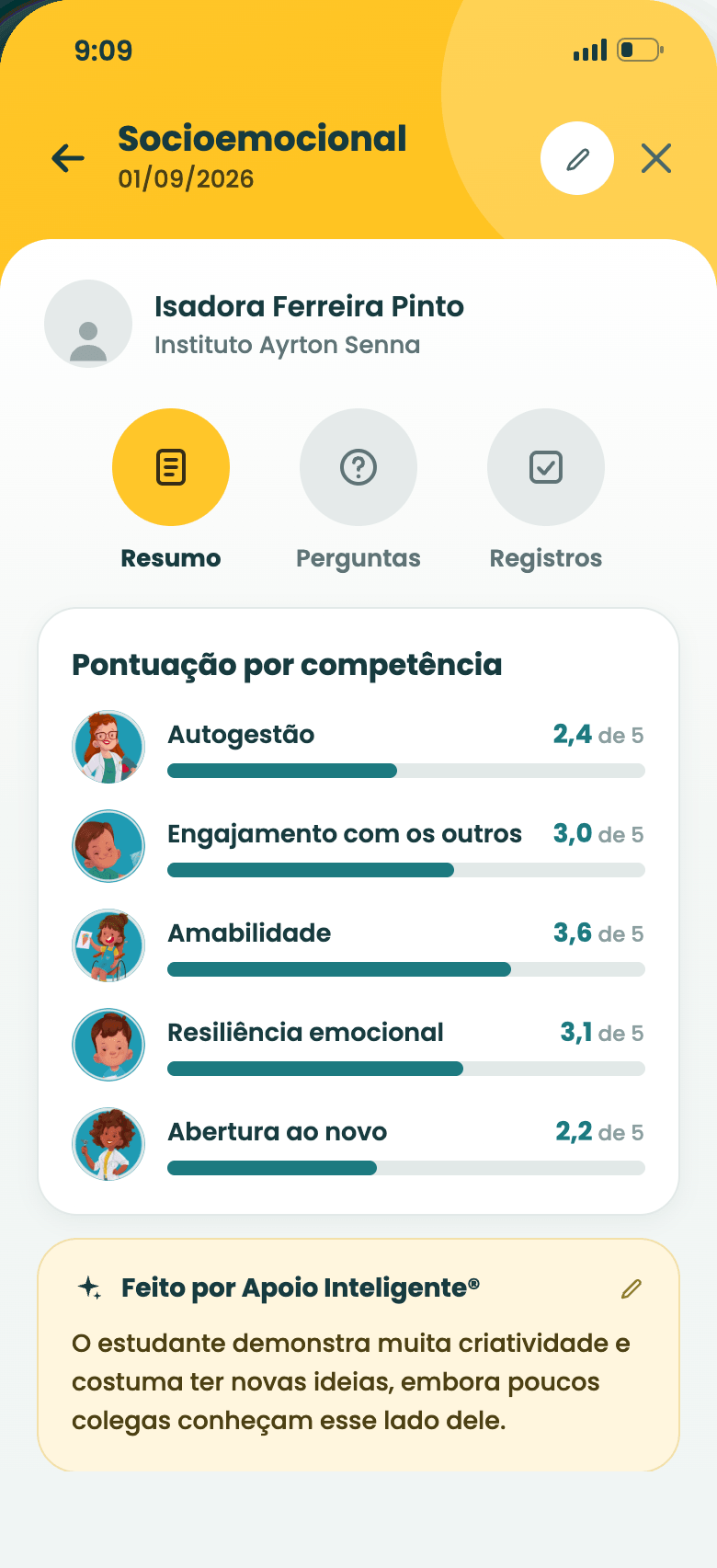
Gamified activities that work on attention, memory and language.
An adapted game is not an easier game.
It is the same skill, along a path the student can travel, with visual support, no time pressure and at the support level their functional characteristics indicate.
- Emotion recognition
- Visual memory
- No timer
Magrid does not teach the curriculum. It builds what comes before.
Language-free cognitive foundation: nothing to read, nothing to listen to, just a visual task the student understands by doing. And fully integrated into Vínculoo®, not a separate platform.
Partner games run inside the platform. What the student plays comes back as data in their plan.
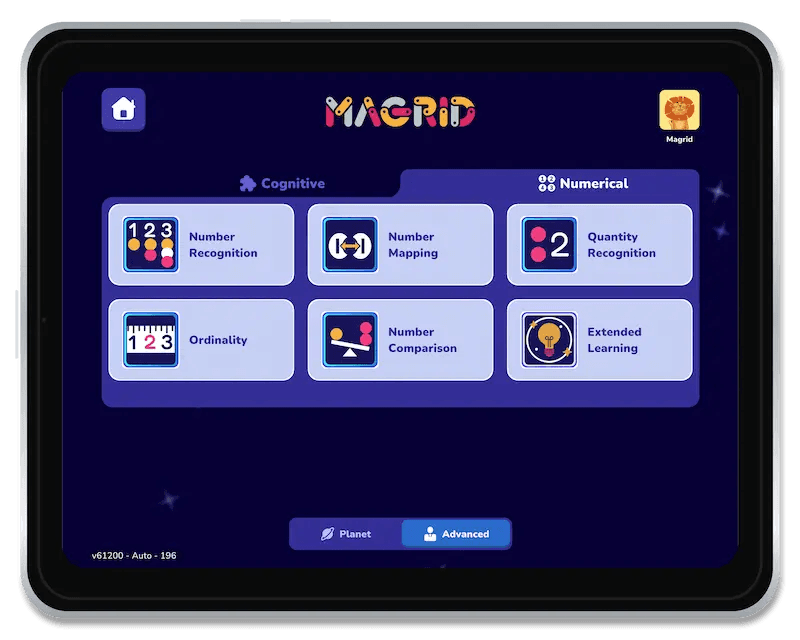
- Working memory
- Mental rotation
- Sense of quantity
Reading starts before the word. It starts with the sound.
Dom e as letras works the letters of the alphabet and their sounds across five worlds: phonological awareness, letter-sound correspondence and vocabulary. It is for the early literacy years, from an institute devoted to dyslexia and neurodiversity.
Partner games run inside the platform. What the student plays comes back as data in their plan.
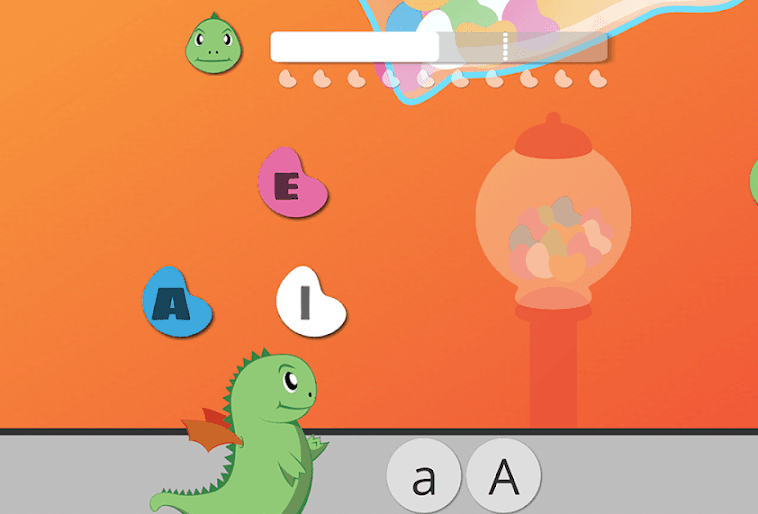
- Phonological awareness
- Letter-sound correspondence
- Vocabulary
And the full catalogue from our partners
- Essay questions
- Multiple choice
- Adapted games
- Adapted videos
- Puzzles
- Sequences
- Audio description
- Braille
- Augmentative and Alternative Communication
- Screenings
- Diagnostic assessments
Any format.
Any way of learning.
The teacher chooses the content.
Vínculoo® helps adapt it to each student.
Grounded in Universal Design for Learning: it is not the student who adapts to the material. It is the material that adapts to each student.
And in your school, how would this work?
Tell us about your case. You will talk to someone who knows the platform from the inside, not to a salesperson.