
Company news
Among 193 initiatives in Latin America, Vínculoo® was one of four selected by the IDB and Ceibal
In IA Presente, the IDB's first call for AI solutions in education, Vínculoo® was named one of four standout initiatives out of 193 entries from 22 countries, and presented the case at the EduIA conference in Montevideo.
By Vínculoo®, Plataforma de educação especial e inclusivaOctober 15, 20255 min read
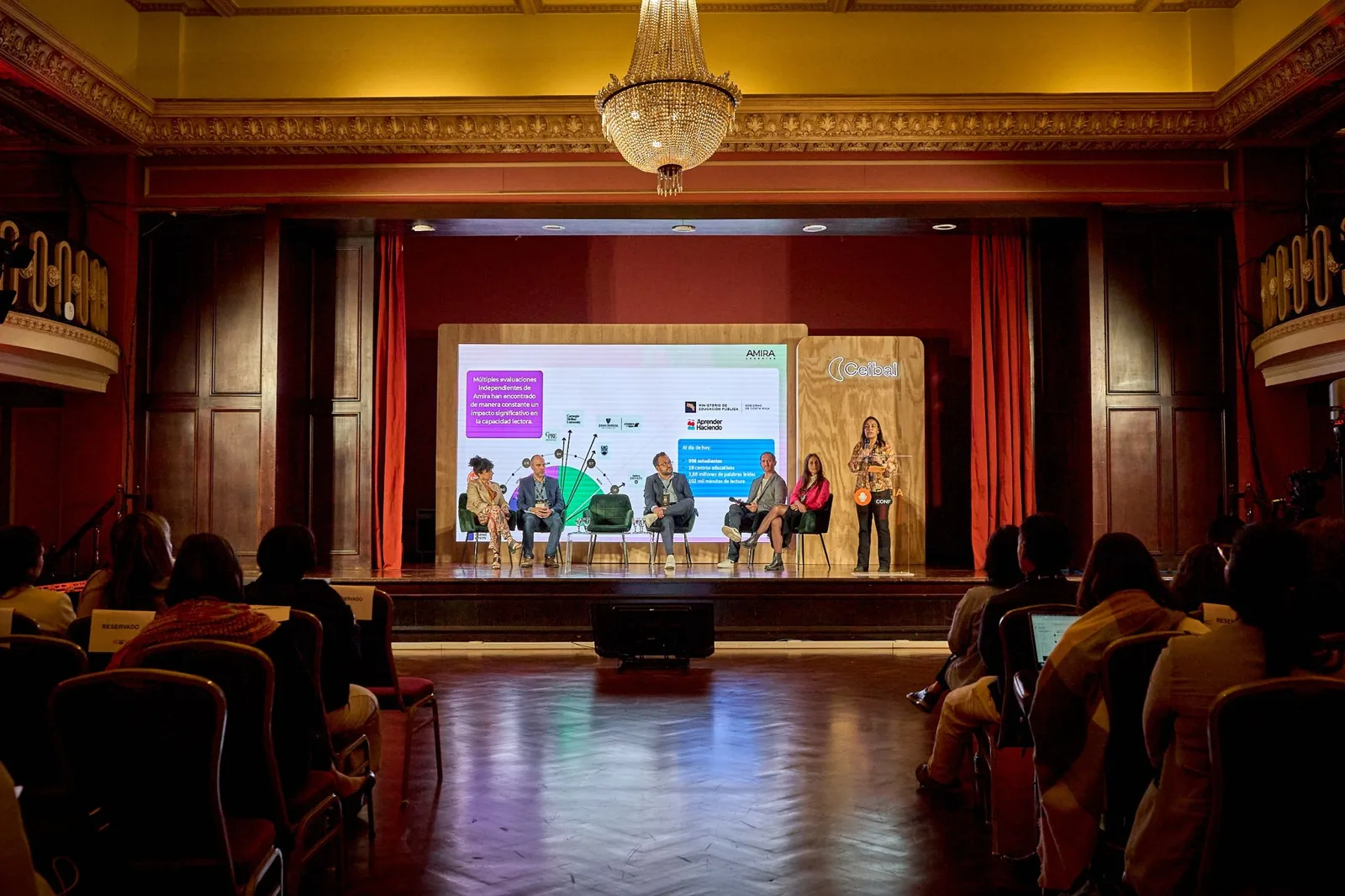
Vínculoo® was one of four standout initiatives of IA Presente, the Inter-American Development Bank's first call for artificial intelligence solutions applied to education. In total, 193 initiatives from 22 countries across Latin America and the Caribbean entered the call, and four were selected.
It was run in partnership with Ceibal, Uruguay's state center for educational innovation, and implemented by Socialab. The final selection was made by a committee led by the IDB and Ceibal.
The case was presented on a panel at EduIA Conf, the regional congress on artificial intelligence in education organized by Ceibal, held in October 2025 at the Mercosur Building in Montevideo.
What IA Presente was
The call had one rule that changed everything: only solutions already running in real schools could enter. No prototypes, no lab pilots.
The goal was to map what is actually running in classrooms across the region, identify what works and under what conditions, expose the obstacles that appear when scaling, and inform public policy with evidence from practice rather than promise.
Startups, NGOs, universities, public agencies and hybrid partnerships were all eligible.
The four standout initiatives
- Empujón Educativo (Argentina): combines ethical AI, neuroscience and behavioral insights to build a personalized pathway for each student that adapts over time without lowering expectations.
- Aprender Haciendo, with Amira Learning (Costa Rica): AI listens to children reading in Spanish and English, analyzes fluency and comprehension, and gives real-time feedback.
- Rio de Janeiro's Education Secretariat (Brazil): uses AI to automate validation of school invoices. A mundane task with outsized impact: principals and district teams spend less time on paperwork and more on learning.
- Vínculoo® (Brazil): an inclusive education platform built on an AI engine trained for students with disabilities, helping teachers personalize plans, track progress and create inclusive experiences.
According to the IDB, together the four show where the sweet spot for AI in education lies: pedagogy, context and scalability.
What the 193 projects reveal about AI in education in the region
The mapping is the first regional snapshot of AI inside the classroom, and the numbers explain the moment:
- 57% of initiatives target classroom learning: adaptive platforms, literacy tools using speech recognition, copilots for lesson planning and feedback.
- More than 25% target inclusion and learning continuity: students with disabilities, socio-emotional needs, access barriers, remote areas.
- Only 16% address school management and system-level decisions, which the IDB itself points to as the underserved frontier.
On the technical side, 59% use generative AI, 27% language models, 24% natural language processing, 12% image or video recognition and 12% speech recognition. Nearly half, 48%, combine more than one modality. The IDB reading is direct: the region is not simply importing ready-made tools, it is combining technologies for local context.
Inclusion is no longer a niche
The most important figure for anyone working in special education is that more than a quarter of the region's solutions target inclusion.
In 2019, when Vínculoo® started, the argument was the opposite: special education was niche, expensive, hard to scale. Seven years later, inclusion appears as one of the main drivers of educational AI innovation in Latin America, according to the IDB itself.
That is not a change in rhetoric. It is a change in where the region's investment and technical effort are going.
The two challenges the report flags
The IDB does not end on celebration. It flags two gaps that apply to everyone building AI for schools.
Ethics and responsible use. About 57% of submissions acknowledged the risk of algorithmic bias, but only 27% described concrete mitigation strategies and 24% referenced principles such as transparency and explainability. The conclusion: responsible AI still has to move from agenda to implementation, with governance, audits, data protection and teacher training.
Evidence and impact. About 70% reported some form of evaluation, but few have rigorous impact studies. Scaling without that means investing in the dark.
In special education both points weigh even more, because the data is sensitive and the decision affects one specific student's path. At Vínculoo®, AI suggests and organizes; the pedagogical decision stays with the teacher.
The panel in Montevideo
At EduIA, Vínculoo® shared the stage with Marianela Lopez, of Empujón Educativo, Alejandra Sánchez, of Aprender Haciendo, and representatives of Rio de Janeiro's Municipal Education Secretariat.
Four countries, four different problems, one shared conclusion: innovating in education is less about the technology and more about rethinking processes, connecting people and creating real value for those who need it most.
Where Vínculoo® is today
Vínculoo® is a Brazilian special and inclusive education platform, founded in 2019, serving private schools and public school networks from primary through secondary education. Current numbers:
- More than 356 schools
- More than 17,000 students
- More than 8,000 teachers
- Presence in more than 10 Brazilian states
- More than 2 million educational data points processed
Frequently asked questions
What is IA Presente?
It was the Inter-American Development Bank's first call for artificial intelligence solutions applied to education, run in partnership with Ceibal and implemented by Socialab. Only solutions already deployed in schools were eligible.
How many initiatives took part in IA Presente?
193 initiatives from 22 countries across Latin America and the Caribbean.
Which were the standout initiatives of IA Presente?
Empujón Educativo (Argentina), Aprender Haciendo with Amira Learning (Costa Rica), Rio de Janeiro's Education Secretariat (Brazil) and Vínculoo® (Brazil).
What share of AI education solutions in Latin America focus on inclusion?
More than 25% of the 193 mapped initiatives focus on inclusion and learning continuity, including students with disabilities and students in vulnerable situations.
What is EduIA Conf?
It is the regional congress on artificial intelligence in education organized by Ceibal in Montevideo, Uruguay. The 2025 edition took place on October 14 and 15 at the Mercosur Building.
What does Vínculoo® do?
It is a Brazilian special and inclusive education platform. It helps schools and school networks understand, plan and follow the path of every student with a different way of learning, turning information into pedagogical strategy.
About Vínculoo®
Vínculoo® is a Brazilian special and inclusive education platform. It helps schools and school networks understand, plan and follow the path of every student with a different way of learning, whether from autism, ADHD, dyslexia, dyscalculia or any other condition that shapes how they process, express and take part in learning.
Data and analysis: IDB education blog.
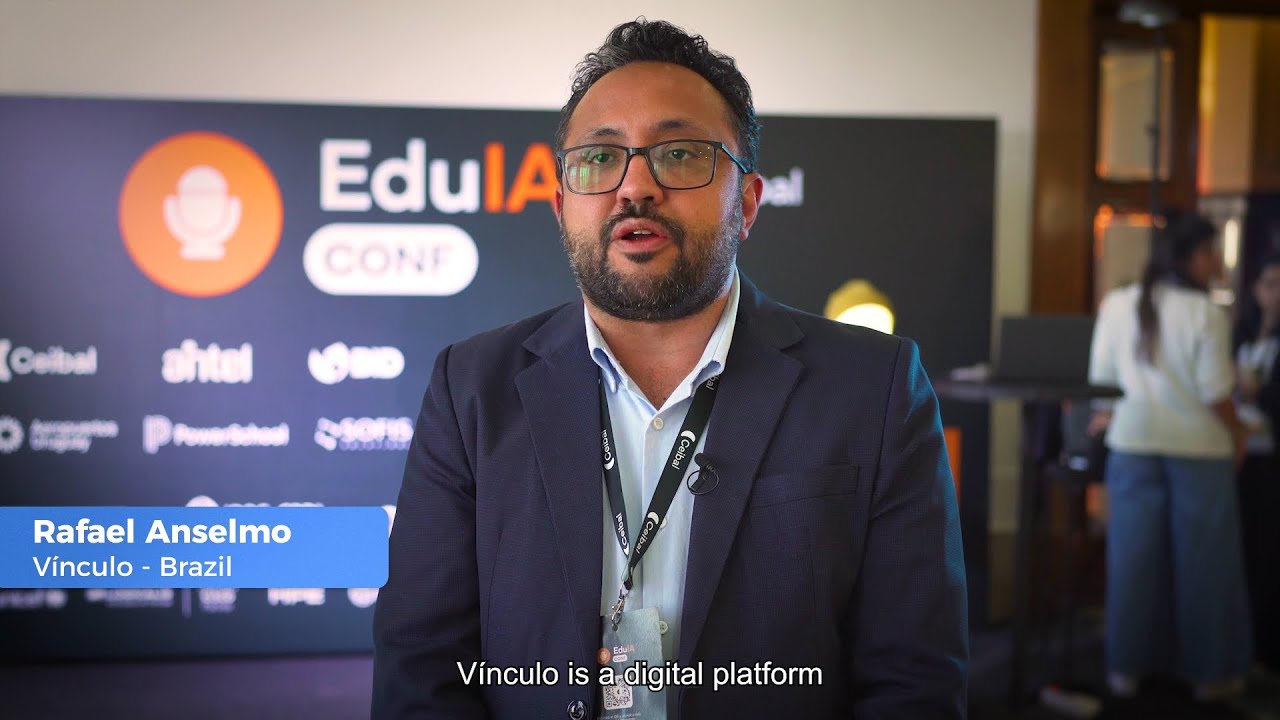
Reviewed by Rafael Anselmo