
For schools
Lessons from Specialized Educational Support: Reflections and Learning for an Inclusive Education
Specialized educational support (AEE, in Brazil) is a valuable tool in inclusive education, because it helps students who require additional support develop better.
By Renata OliveiraFebruary 22, 20258 min read

Introduction to Specialized Educational Support in Inclusive Education
Specialized educational support (AEE, in Brazil) is a valuable tool in inclusive education, because it helps students who require additional support develop better. With the AEE, everyone can learn more effectively. It is essential that this support is adapted to each student, because each one has their own requirements and their own challenges.
Some of the ways the AEE can make a difference include:
- Identifying requirements: Understanding the specific difficulties each student faces.
- Developing strategies: Creating adapted activities that help with learning.
- Encouraging autonomy: Prompting students to be more independent in school activities.
With these practices, the AEE becomes an important ally in guaranteeing an education that is more inclusive and more accessible to everyone.
 What Specialized Educational Support is
Specialized educational support (AEE) is an important approach for supporting students who face learning challenges, such as disabilities and disorders. The main goal of this service is to complement mainstream teaching, guaranteeing that every child has suitable and stimulating access to knowledge. It usually takes place in multifunctional resource rooms.
You may wonder: how does that work in practice? The AEE goes beyond simply offering extra lessons. It involves distinct methods and resources that help each student develop at their own pace. Some children may need activities to be adapted, for example, while others benefit from using assistive technology.
Beyond that, the AEE is a process that requires constant follow-up. It is fundamental that educators always keep an eye on student progress and adjust teaching strategies as needed. To make that work easier, here are some important actions that can be adopted:
- Individualized planning: Creating a specific plan for each student, thinking about what they require.
- Hands-on activities: Proposing activities that make learning more enjoyable and more engaging.
- Emotional support: Offering a welcoming environment where students feel comfortable learning.
With this approach, we guarantee a more inclusive and more inspiring environment for everyone.
Why the AEE matters for an inclusive education
Specialized educational support (AEE) is essential to guaranteeing that students with specific educational requirements have the opportunity to learn and develop in an inclusive environment. It does more than help with learning; the AEE is important support for these children's school life. Picture how that can affect a student's self-esteem and their participation in the classroom.
The AEE goes beyond academic content. It also takes care of the emotional and social side, helping students feel more secure and more confident. That is vital, because the fear of not fitting in can often pull children away from school activities. Let us look at some ways the AEE can make a difference:
- Access to knowledge: The AEE makes it easier for every student to understand what is being taught, letting them take an active part.
- Personalized learning: Each student has a unique way of learning. The AEE adapts teaching strategies to those particularities.
- Encouraging autonomy: Prompting independence is fundamental. The AEE helps students become more self-confident and take control of their own learning.
These points show why the AEE matters so much. With it, education becomes fairer and more inclusive, giving everyone the chance to shine.
 Pedagogical approaches in Specialized Educational Support
In specialized educational support (AEE), pedagogical approaches are fundamental to promoting learning for every student. That is especially important when we consider that each student has their own unique requirements and challenges. Using varied strategies can make all the difference in everyday school life.
Examples of approaches that make a difference:
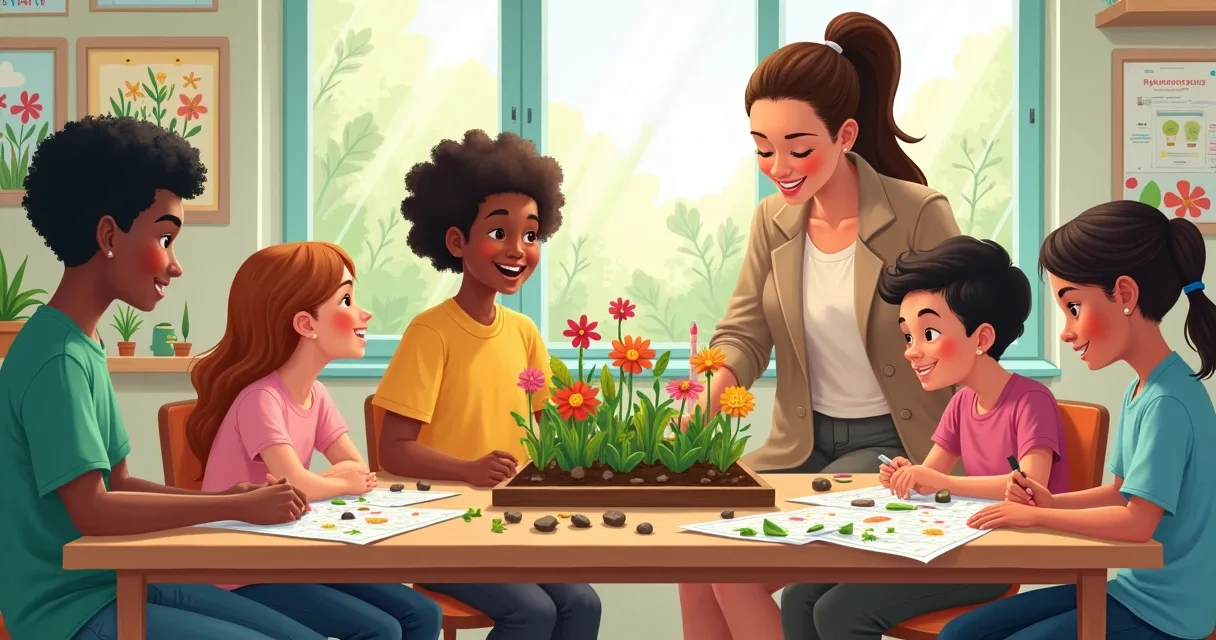
- Project-based learning: Here, students come together to work on a shared project. That interaction not only strengthens teamwork, it also makes learning more practical and more interesting. Picture, for example, creating a garden at school, where each student takes on part of the responsibility.
- Multisensory teaching: For students who learn in different ways, using hearing, sight and touch can be very useful. In a science lesson, for example, using concrete objects such as plants and rocks while talking about them helps fix the learning more effectively.
- Differentiated teaching: Adapting the content to each student's abilities is essential. If a student is great at drawing, they can make posters explaining a topic. That values their ability and involves them actively in learning.
These approaches are not only useful, they are also essential to creating an environment where every student feels seen and motivated to learn. Each of them can make the most of their education, feeling part of something bigger.
Challenges in Specialized Educational Support
Specialized educational support (AEE) is an important part of inclusive education, but it faces many challenges. Understanding those difficulties is vital to offering students better support. Let us explore some of the main problems the AEE faces.
Lack of resources: Many schools, especially public ones, have financial problems. That leaves resource rooms without what they need to serve every student. How can we expect them to learn if they do not have adequate materials? It is fundamental that schools obtain resources to improve that situation.
Educator training: Another crucial point is teacher training. Many have no specific preparation in inclusive education, which can create insecurity when working with students with disabilities. If educators do not feel prepared, how can they help these students develop their potential?
Prejudice and lack of understanding: Unfortunately, many people still see students with disabilities as different or incapable. That view has to change. Inclusion is essential for everyone, and better understanding the difficulties and the requirements is an important step.
Educators' workload: Beyond that, teachers' workload can be very heavy. With a high number of students, giving each one the attention they need is hard. For every student to learn, it is vital to find ways of supporting teachers on that front.
- Awareness: Running campaigns that teach about inclusion.
- Training: Offering regular training for teachers.
- Psychological support: Providing support so students and teachers can handle the challenges.
Understanding and facing these challenges is an important step toward guaranteeing that everyone has a quality, inclusive education.
 The part educators play in Specialized Educational Support
Educators play an essential part in specialized educational support (AEE). They bridge what students require and the best ways of teaching. Let us look at how teachers can work in this important context.
To start with, it is fundamental that educators know each student's profile. That means paying attention to the specific difficulties each one faces and finding out how each student learns best. A teacher can ask, for example: "What does my student need in order to improve in maths?" That reflection is the first step toward more personalized teaching.
Another important point is using a range of resources to engage students. Assistive technology, educational games and hands-on activities can make lessons more dynamic and more interesting. These approaches not only teach, they also motivate students to take an active part in class.
Beyond that, it is fundamental to create a welcoming and inclusive environment. Educators should encourage positive interaction between students, promoting respect for differences. Here are some tips to help along the way:
- Continuing training: Investing in training on inclusive education is essential.
- Collaboration: Working together with other professionals at the school is fundamental to student success.
- Constant assessment: Monitoring progress and adjusting the teaching as needed is key to learning.
In this way, the educator's part in the AEE is vital to guaranteeing that every student learns and feels part of the classroom.
Lessons learned from Specialized Educational Support
When we talk about specialized educational support, it is important to recognize how it can transform many students' lives. The AEE is not just help with learning; it is a way of guaranteeing that everyone has access to quality teaching. Let us explore some important lessons we can take from this practice.
Lessons from the AEE:
- Individualization: Each student is unique, with their own requirements and their own ways of learning. The AEE shows how adapting teaching can help everyone develop better.
- Collaboration: Working as a team is essential. Professionals such as teachers, psychologists and therapists can join forces to support students more effectively.
- Technology: Digital tools, such as the Vínculoo® platform, make learning more accessible. These technologies help teachers create plans that genuinely work for students.
- Empathy: Understanding what students are going through makes all the difference. The AEE teaches us to listen and to be sensitive to what each one requires, creating a more welcoming environment.
These lessons from the AEE help not only students who face difficulties, but everyone involved in education. After all, respecting and listening to every voice is the first step toward building a more inclusive school.
Case studies on the AEE and inclusive education
Case studies on specialized educational support (AEE) are essential to understanding how this support helps students with specific requirements. When we see practical examples, it becomes easier to see how the AEE builds a path toward inclusion in education.
One interesting example is a school that started using the AEE. There, a student with dyslexia received support with special reading methods. With adapted materials, such as audiobooks and texts with easier-to-read type, that student improved their performance and gained confidence. It shows how individualized teaching can transform the school experience.
Another important case involves students with autism spectrum disorder (ASD). At this school, educational games and alternative forms of communication were used. That got students interacting more with each other and left them more motivated in the activities. These examples reveal the strength of having varied resources that address what each student requires.
Beyond that, the Vínculoo® platform has been a useful tool for educators. Through Apoio Inteligente®, teachers get suggestions that make personalized teaching easier and help follow student progress.
These cases show that the AEE is crucial so that everyone has the opportunity to learn and develop in a welcoming, inclusive environment. Here are some tips for an effective AEE:
- Personalized support: Encourage adaptations that fit what each student requires.
- Educator training: Invest in training for inclusive teaching.
- Welcoming environment: Create a space where everyone feels safe and valued.
- Family involvement: Bring parents closer to the school, they can help a great deal.
Closing thoughts on inclusive education and the AEE
Reflecting on how inclusive education and specialized educational support (AEE) work is fundamental. It shows how important it is that every student can learn together. Inclusion is not just a rule, it is an essential right of every student. When we recognize and respect differences, we create a richer and more interesting teaching environment.
For inclusive education to happen effectively, some points have to be taken into account:
- Adapting the methods: Teachers should adjust their ways of teaching to address what each student requires. Using different kinds of activity, for example, can help a great deal.
- Collaboration between professionals: Having a diverse team of specialists, such as psychologists and therapists, is vital to supporting students more completely.
- Use of technology: Digital tools can make learning easier. Educational programs are great for making lessons more dynamic.
Inclusion in education is an essential step toward a fairer and more equal future. Let us build a space together where everyone can shine.