
For schools
Play at school, a look at diversity.
Play is the axis of the curriculum in early childhood education, which reinforces the importance of reflecting on the body, on interaction and on the possibilities of creation among children, fundamental elements that make up this human activity.
By Renata OliveiraSeptember 23, 202410 min read
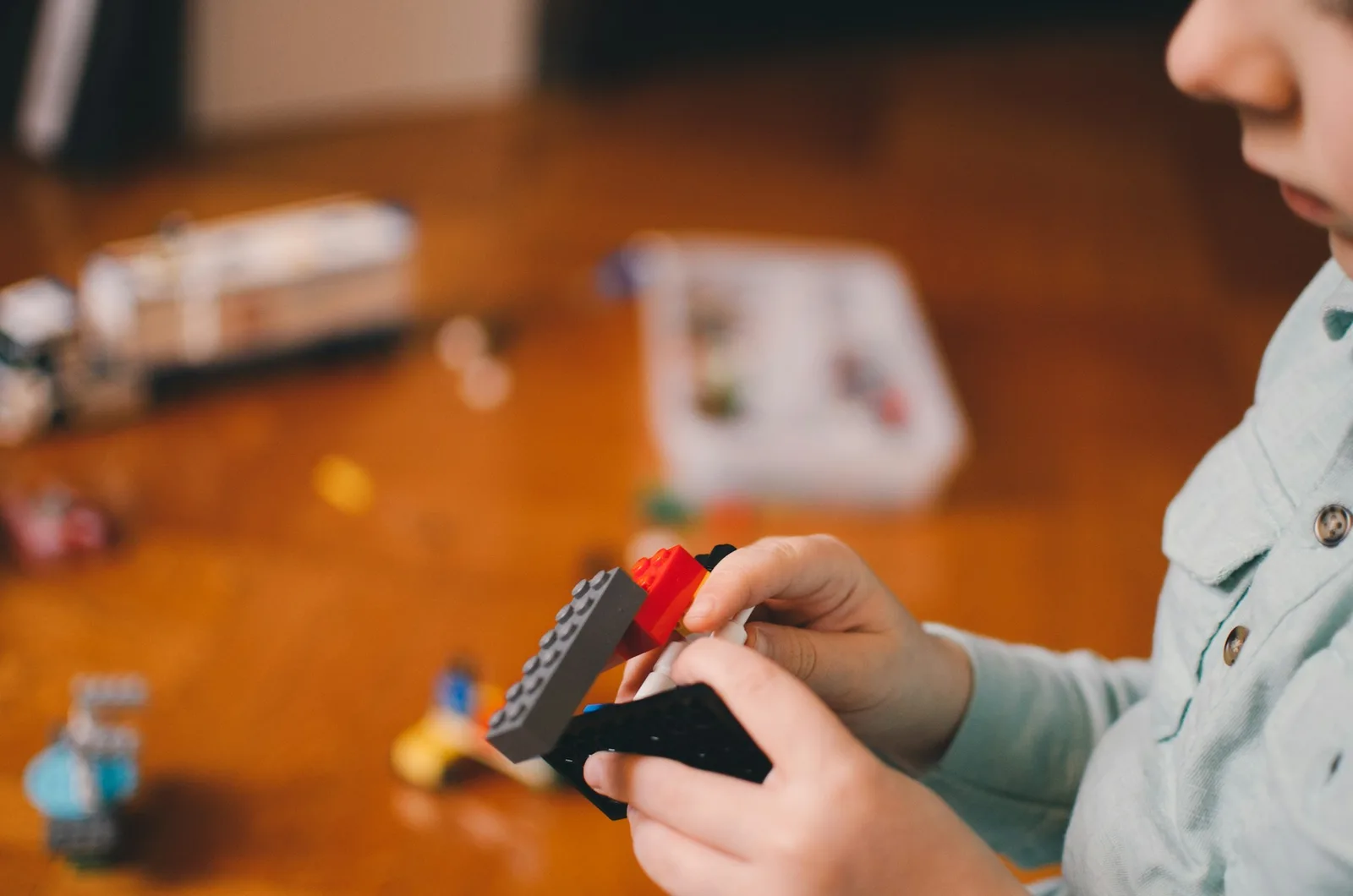
Play is the axis of the curriculum in early childhood education, which reinforces the importance of reflecting on the body, on interaction and on the possibilities of creation among children, fundamental elements that make up this human activity.
We cannot, however, think about the play that happens in an educational context without considering the diversity and plurality of ways of being, of existing and of living everyday life in these institutions. In every sphere, across the different cultural and social capitals that exist, across the varied ways of learning and developing, among the children served by special education (PAEE, in Brazil), for everyone who meets day after day in early childhood education, the question remains:
How do play and games happen amid difference? How do these moments strengthen the development and learning of every child?
To answer these questions, it is necessary to reflect on three fundamental points: the question of difference, what inclusive education legislation says about early childhood education, and why play matters.
As Carneiro (2012) shows, it is in early childhood education that “the young child, on entering a school space where differences are welcome, will naturally learn to value the other for who they are, for what they are able to do” (p.93). Carneiro (2012) also points to the need to "[...] structure early childhood education to serve students with special educational requirements, providing them with opportunities to develop their potential fully, taking their particularities into account” (p. 86)
When we talk about inclusive special education, meaning serving children with special educational requirements in the mainstream school, many challenges appear, such as: a lack of continuing teacher training, along with a lack of support and information from the leadership team regarding inclusive practice.
Given the point this text opens with, though, that play should guide planning in early childhood education, it is necessary to reflect on how this activity, understood in all its potential and complexity, can be highly inclusive in itself. And that is exactly what we will discuss in this article.
What does the legislation say about inclusive education in early childhood education?
When we look in current legislation for inclusive education in early childhood education, few official documents address the theme in any depth. Most treat it superficially, often only citing early childhood education as compulsory from age 4 and as part of basic education (along with the first years of primary school).
Starting with the main national document, the Federal Constitution of 1988 states in article 205 that education is everyone's right, and in article 208, item IV, affirms that it is the duty of the State to guarantee early childhood education, in nursery and pre-school, for children up to 5 years old. Another document that treats this guarantee as a duty of the State is the Statute of the Child and Adolescent (ECA, 1990), which in article 54, item IV, prescribes “provision in nursery and pre-school for children from zero to six years of age”.
In the national education act of 1996 (LDB, 96), early childhood education is defined as the first stage of basic education, offered in nursery (0 to 3 years) and pre-school (3 to 5 years), being a right whose purpose is to develop the child fully, in physical, psychological, intellectual and social terms. In chapter V of this document, which covers special education, article 58, paragraph 3, provides for that offer, which must cover the age range from zero to six years, during early childhood education.
The Salamanca Statement (BRASIL, 1994) is a relevant document for inclusive education, which also addresses early childhood education, and in article 50 deals with the integration of PAEE children, showing that this “[...] would be more effective and more successful if special consideration were given to educational development plans in the following areas: early childhood education, to guarantee the educability of every child [...]” (p. 75).
Regarding the National Curriculum Guidelines for Early Childhood Education (DCNEI), item VII of paragraph 1, article 8, of Resolution CNE/CEB no. 05/2009, states that the pedagogical proposals of early childhood education institutions must provide conditions for collective work and for the organization of materials, spaces and times that guarantee “the accessibility of spaces, materials, objects, toys and instructions for children with disabilities, global developmental disorders and giftedness” (BRASIL, 2013).
In that document specific to early childhood education, that is the only part where PAEE children are referenced. If we analyze it carefully, we can see that inclusive education is treated broadly, that is, it speaks generally about accessibility to the surrounding spaces and objects, as well as about the help that should be offered to these children.
Turning to documents focused on inclusive education, early childhood education appears in some of them, referenced as “at every educational level”, as the examples below show.
The International Convention on the Rights of Persons with Disabilities and its Optional Protocol (2010a), whose article 24, on education, affirms in its first article that the States Parties will guarantee an “inclusive education system at all levels, as well as lifelong learning, [...]”. That is an example of how early childhood education does not appear as part of basic education, nor is the age range it covers cited in such a document, ending up covering education in general.
The document that discussed early childhood education most was the National Special Education Policy from the Perspective of Inclusive Education (PNEE-EI; BRASIL, 2008). It sets as its goal the access, participation and learning of the group served by inclusive education, through guidance to mainstream schools to guarantee that “special education runs across everything from early childhood education to higher education”. Beyond that, article VI further clarifies:
Access to education begins in early childhood education, in which the bases necessary for building knowledge and for the student's overall development are formed. At that stage, play, access to differentiated forms of communication, the richness of stimulus in physical, emotional, cognitive, psychomotor and social terms, and living alongside difference all favor interpersonal relationships, respect and valuing the child.
From birth to three years old, specialized educational support is expressed through early stimulation services, which aim to make the process of development and learning as effective as possible in connection with health and social services. (p.12)
Under the guidance of the LDB/96 for the education of PAEE children, the Ministry of Education and Culture (MEC) produced, in 2001, the National Curriculum Reference for Early Childhood Education (RCNEI), Strategies and Guidance for the Education of Children with Special Educational Requirements (BRASIL, 2000). In that document, the education of children from zero to six years old is placed under the responsibility of the school. Nurseries and pre-schools therefore became part of the first stage of basic education. The text shows how important it is to create a school where everything students require is addressed from the start, and it also emphasizes the importance of early childhood education.
In item 5.1 there is guidance for nurseries and pre-schools on serving PAEE children, where it is necessary to:
Provide human resources qualified in special education and early childhood education to give backing and support to the teachers of nurseries, pre-schools or early childhood education centers, as well as making their training and continuing education possible through courses or placements at institutions committed to the inclusion movement;
Carry out a survey of community and institutional services and resources, such as maternity units, health posts, hospitals, schools and units serving children with special educational requirements, among others, so they can become resources for backing, cooperation and support;
Guarantee the participation of the leadership, the teachers, the parents and specialized institutions in producing a pedagogical project that takes inclusion into account;
Provide for raising awareness in the school community regarding the inclusion of children with special educational requirements;
Promote gatherings of teachers and professionals with the goal of reflecting on, analyzing and resolving possible difficulties in the inclusion process;
Request technical backing from the body responsible for special education in the state, the Federal District or the municipality, as well as from the Ministry of Education;
Adapt the internal and external physical space to serve children with special educational requirements, following accessibility standards. (BRASIL, 2000, p.24-26)
Also in 2010, the National Education Council promulgated new National Curriculum Guidelines for Basic Education, in which “inclusion, valuing differences and addressing plurality and cultural diversity, recovering and respecting the various expressions of each community” (BRASIL, 2010b).
Another important document for inclusion is the LBI, Brazil's disability rights law (also known as the Statute of the Person with a Disability). Chapter IV deals with “the right to education”, but again broadly, as set out in article 28, item I: “an inclusive education system at all levels and in all modalities, as well as lifelong learning” (BRASIL, 2015, our emphasis)
Following what is set out in the existing legislation, early childhood education is treated more superficially and with less detail than the rest of the educational period, guaranteeing, at least, its provision for children from zero to six years old. The PNEE-EI, besides discussing that question, also takes up specialized educational support in early childhood education, explaining what it is and what the goal of that service is with children up to 3 years old.
Play amid difference
Play, when valued and considered a powerful moment of learning, development, and the production and reproduction of cultures, draws attention in an educational context to everything said and unsaid, to what is expressed through the body, through gesture, through action, through the gaze, through laughter and emotion, which in itself runs counter to the standardizing, constraining mode historically present in educational practice. In play there is space for individuality, for the unforeseen, for communication through multiple languages and for the many ways of being.
When there are spaces, times and materials designed so that play genuinely happens, along with a way of seeing that values and understands this human dimension in all its depth, playing bodies share a culture of play, with the surprises and the unforeseen of this open, inclusive communication: everyone, with their own ways of being and existing, sharing the experiments and sensations that belong to play.
Educational institutions are, above all, places of encounter between children and privileged places for playing together. For that, an openness to the unexpected is necessary, to the varied possibilities, to the creation that is born of relationship: with the other, with the object, with the spaces. Everyone, with their capabilities, limitations and individuality, has a right to play.
It falls to adults, professionals of childhood, to place themselves as researchers of their own practice, as observers of who each and every one of the children they meet in the everyday life of educational institutions is. They will be the references, the path for planning, reinventing, enabling and enriching the infinite possibilities of children, with or without disabilities, with or without special educational requirements, to live their play and their childhoods in all their fullness.
References
BRASIL. Congresso Nacional. Constituição da República Federativa do Brasil. Brasília: Diário Oficial da União, 05 de outubro de 1988.
BRASIL. Congresso Nacional. Lei de Diretrizes e Bases da Educação Nacional - LDB n.º 9.394, de 20 de dezembro de 1996. Brasília: Diário Oficial da União, 23 de dezembro de 1996.
BRASIL. Declaração de Salamanca e Linha de Ação sobre Necessidades Educativas Especiais. Brasília: Coordenadoria Nacional para Integração da Pessoa Portadora de Deficiência, 1994.
BRASIL. Estatuto da criança e do adolescente: Lei federal nº 8069, de 13 de julho de 1990. Rio de Janeiro: Imprensa Oficial, 2002.
BRASIL. Referencial Curricular Nacional para Educação Infantil. Brasília: MEC / SEF, 1998.
BRASIL. Conselho Nacional de Educação. Câmera de Educação Básica. Parecer nº 7, de abril de 2010. Diretrizes Curriculares Nacionais Gerais para a Educação Básica. Diário Oficial da União. Brasília, 9 de julho de 2010. (2010b). Available at: <http://pactoensinomedio.mec.gov.br/images/pdf/pceb007_10.pdf> Accessed: 22 February 2021.
BRASIL. Política Nacional de Educação Especial na Perspectiva da Educação Inclusiva. 2007. Available at: <http://portal.mec.gov.br/index.php?option=com_docman&view=download&alias=1669 0-politica-nacional-de-educacao-especial-na-perspectiva-da-educacao-inclusiva-05122014&Itemid=30192 > Accessed: 22 February 2021.
BRASIL. Convenção sobre os Direitos das Pessoas com Deficiência e seu Protocolo Facultativo: Decreto Legislativo nº 186, de 09 de julho de 2008: Decreto nº 6.949, de 25 de agosto de 2009. 4ª Ed.,Rev. e atual. Brasília: Secretaria de Direitos Humanos, 2010a
BRASIL. Ministério da Educação. Secretaria de Educação Básica. Secretaria de Educação Continuada, Alfabetização, Diversidade e Inclusão. Secretaria de Educação Profissional e Tecnológica. Conselho Nacional da Educação. Câmara Nacional de Educação Básica. Diretrizes Curriculares Nacionais Gerais da Educação Básica / Ministério da Educação. Secretaria de Educação Básica. Diretoria de Currículos e Educação Integral. Brasília: MEC, SEB, DICEI, 2013
BRASIL. Lei Brasileira de Inclusão: Estatuto da Pessoa com Deficiência: Lei federal nº 13.146, de 6 de julho 2015. Brasília, 2015
CARNEIRO, Relma U. C. Educação Inclusiva na Educação Infantil. Práxis Educacional. Vitória da Conquista/BA. v.8, n.12, jan. /jul. 2012. pp. 81-95.
PEREZ, Beatriz Brunaldi. Educação Infantil Inclusiva: A corporeidade e o brincar na diferença. 2018. 152p. Dissertação (Mestrado em Educação), Faculdade de Educação, Universidade de São Paulo, São Paulo, 2018.