
For government
Specialized educational support is mandatory in every Brazilian public school. Nobody can say whether it works.
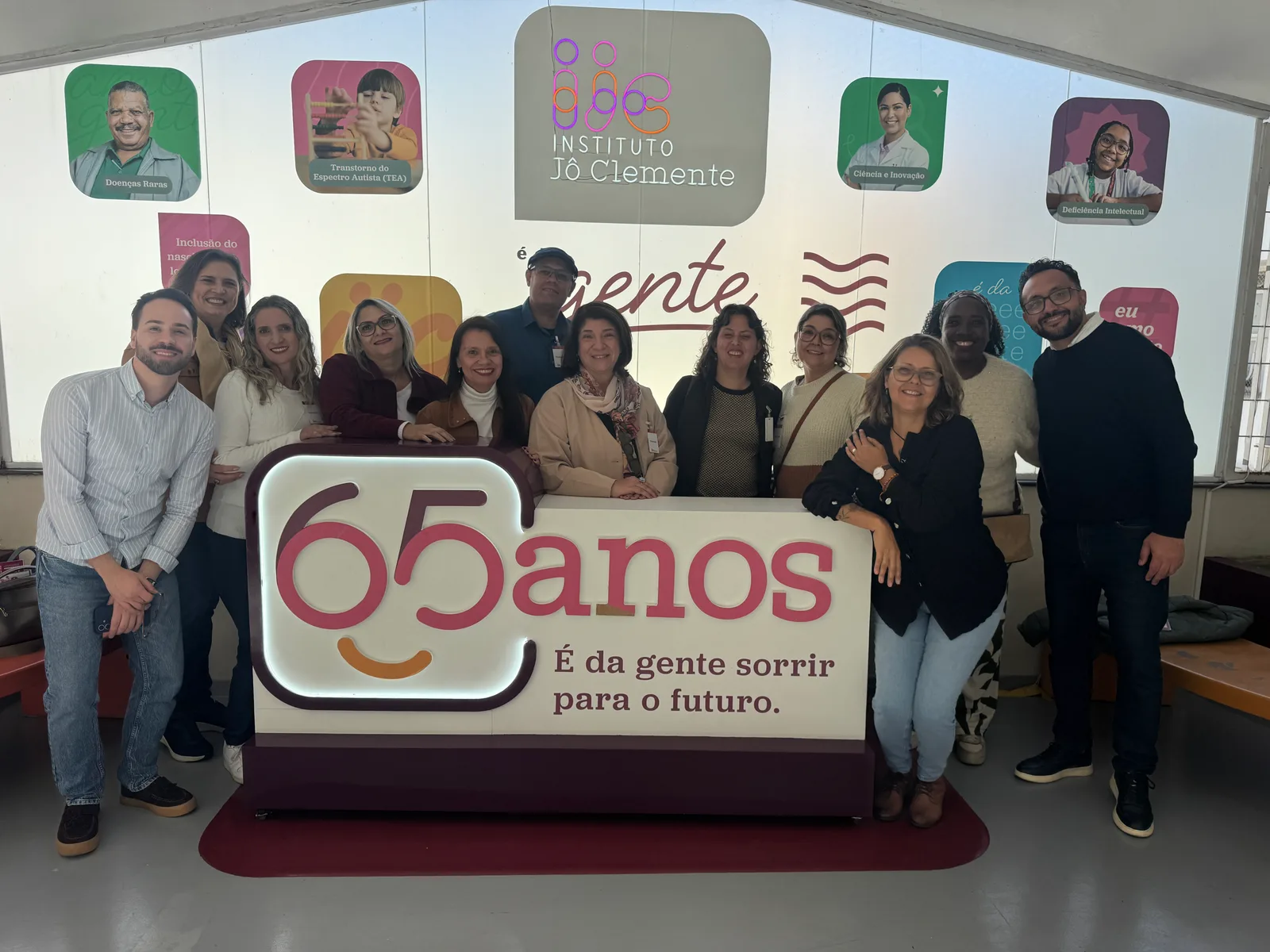
The city of Osasco, Instituto Jô Clemente and Vínculoo® signed a cooperation agreement to research specialized educational support in the municipal school network and produce evidence any network in Brazil can use.
By Vínculoo®, Plataforma de educação especial e inclusivaAugust 16, 20264 min read
Specialized educational support, known in Brazil as AEE, is mandatory in every public school in the country. It happens every day, in thousands of classrooms, and it still runs without evidence about what actually works.
That starts to change in Osasco, in the state of São Paulo.
The city of Osasco, Instituto Jô Clemente and Vínculoo® have signed a cooperation agreement to research this service across the municipal school network.
What AEE is
Specialized educational support is the assistance a school provides, usually outside regular class hours, to students with disabilities, students on the autism spectrum and students with giftedness.
It is not tutoring and it does not replace the regular classroom. It is a complementary service, with a specialized teacher and dedicated resources, designed to remove the barriers that keep the student from learning and taking part alongside classmates. It usually takes place in a multifunctional resource room.
Offering it is mandatory for public school networks. Each student's eligibility is assessed by the school itself.
Coverage is not the only problem
National data shows a service that has not reached everyone. Microdata from the 2024 school census indicates that only 20.5% of Brazilian schools report offering AEE, and that 45.5% of the students who need it are in schools without the service, according to analysis by Instituto Pensi.
The Special Education Indicators Panel from Instituto Rodrigo Mendes, based on the same census, finds that only 41% of special education students have access to AEE, and that just 30.4% of schools with special education enrollment have a multifunctional resource room.
Meanwhile demand grows fast: special education enrollment went from around 1.3 million in 2020 to 2,076,825 in 2024.
But there is a question none of those numbers answers: among the students who do receive AEE, what changes in their learning?
The census measures access. It does not measure effect. And public policy built without measuring effect ends up scaling the wrong practice with the best of intentions.
What the research will do
The study will follow the AEE practices that already exist in Osasco's municipal network and observe what they move in student learning.
Note the verb: follow. This is not about importing an external model and measuring it. It is about looking at what the network's teachers already do every day and turning that practice into organized knowledge.
What comes out of it does not stay in Osasco. It serves any network in the country that has to decide where to place teachers, resources and time.
Three pioneers at the same table
The agreement brings together three different histories.
Instituto Jô Clemente, formerly APAE de São Paulo, was the first in Latin America to bring newborn screening, known in Brazil as the Teste do Pezinho, to the country in 1976, turning early diagnosis into public policy. Today it runs its own teaching, research and innovation center dedicated to intellectual disability.
Osasco is one of the largest economies in the state of São Paulo, and a municipal network large enough to give the study real density.
Vínculoo® built the first Brazilian artificial intelligence dedicated to special and inclusive education.
A pioneer is not whoever arrives first. It is whoever accepts walking without a map.
Why this matters now
Brazil's new National Education Plan sets expansion targets for special education, including multifunctional resource rooms in every municipality. That means school networks across the country will be investing over the coming years.
Investing without evidence is gambling. The sooner research exists on what works in AEE, the better public money is spent and the faster the effect reaches the student.
That is the reason this research exists.
Acknowledgment
Vínculoo® thanks Gustavo Schiavo Matias, Renata Bonotto, Edward Yang and the entire team at Osasco's Education Secretariat.
Where Vínculoo® is today
Vínculoo® is a Brazilian special and inclusive education platform, founded in 2019, serving private schools and public school networks from primary through secondary education. Current numbers:
- More than 356 schools
- More than 17,000 students
- More than 8,000 teachers
- Presence in more than 10 Brazilian states
- More than 2 million educational data points processed
Frequently asked questions
What is specialized educational support (AEE)?
It is complementary pedagogical support, usually outside regular class hours, provided to students with disabilities, students on the autism spectrum and students with giftedness. It does not replace the regular classroom and usually takes place in a multifunctional resource room.
Is AEE mandatory in Brazil?
Yes. Public school networks are required to offer it. The school assesses each student's eligibility.
How many Brazilian schools offer AEE?
Only 20.5% of schools report offering it, according to Instituto Pensi's analysis of 2024 school census microdata. Instituto Rodrigo Mendes finds that only 41% of special education students have access to the service.
What will the Osasco research investigate?
The AEE practices that already exist in the municipal network and what they move in student learning, in order to generate evidence other networks can apply.
Who is part of the cooperation agreement?
The city of Osasco, Instituto Jô Clemente and Vínculoo®.
What does Vínculoo® do?
It is a Brazilian special and inclusive education platform. It helps schools and school networks understand, plan and follow the path of every student with a different way of learning.
About Vínculoo®
Vínculoo® is a Brazilian special and inclusive education platform. It helps schools and school networks understand, plan and follow the path of every student with a different way of learning, whether from autism, ADHD, dyslexia, dyscalculia or any other condition that shapes how they process, express and take part in learning.

Reviewed by Rafael Anselmo