
Podcast
Inclusion is more than enrollment: specialized educational support at scale in Osasco's public schools
In the fourth episode of the Vínculoo® Podcast, Gislene de Cássia Soares Viani, head of specialized educational support at the Osasco Department of Education, discusses inclusion in a network serving more than 3,000 special education students.
By Vínculoo®, Plataforma de educação especial e inclusivaSeptember 25, 20264 min read
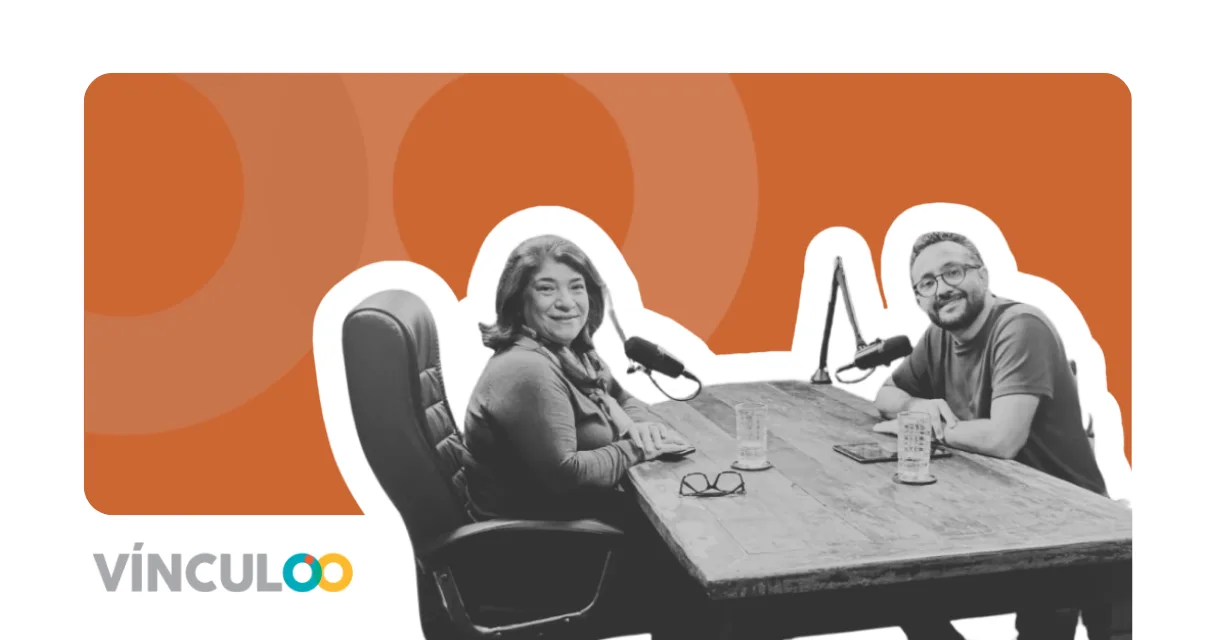
The fourth episode of the Vínculoo® Podcast features Gislene de Cássia Soares Viani, head of specialized educational support (AEE, in Brazil) at the Department of Education of Osasco, in the state of São Paulo.
Osasco's municipal school network supports more than 3,000 students eligible for special education. At that scale, the question running through the conversation cannot be avoided: are these students learning?
Who Gislene Viani is
She has spent 40 years in special education. Gislene holds a degree in pedagogy from UNIP, a qualification in intellectual disability from the University of São Paulo (USP), and specializations in Clinical and Institutional Psychopedagogy, Higher Education Teaching, and Education Law.
She worked at the municipal special schools Dr. Edmundo Campanha Burjato and Dr. José Marques de Rezende, in Osasco, and in multifunctional resource rooms in São Paulo state schools. Today she coordinates the network's inclusive special education projects.
When Osasco moved from a model of special schools to inclusive schools, Gislene followed the change up close. Hers is a career that knows both models from the inside.
What AEE is
Specialized educational support is the assistance that students with disabilities, students on the autism spectrum and gifted students receive in Brazilian public schools. It relies on specialized teachers and adapted resources, and it exists so that these students can learn alongside their classmates.
It is a right guaranteed by law throughout Brazil. It happens every day, in thousands of schools. And almost no one measures whether it works.
Six questions the episode takes on
The conversation is built around provocations. None of them has a ready answer, and all of them apply to any school network in the country.
Presence or learning
The student with a disability is in the regular classroom. But are they learning, or just present? Enrollment opens the door to inclusion. It does not prove that inclusion happened.
From special to inclusive
Osasco went through the transition from special schools to inclusive schools. The episode returns to that change with a question many networks would rather not ask: was closing the special schools good for every student?
Who owns the student
Does the regular classroom teacher still “hand over” the student to specialized support and to the support aide? At heart, the question is about responsibility: whose job is this student's learning inside the school?
The plan on paper
The Individualized Education Plan (PEI, in Brazil) exists to guide how each student is taught. The risk is that it becomes a document left in a drawer, filled in only to meet a requirement. The episode asks whether the plan is really used.
Why open practice to research
Osasco decided to open its specialized educational support practices to research. That means accepting that everyday work will be followed and measured. The conversation covers why the network made that choice.
What Osasco has to teach
A network of this size builds up practice that many others are still working toward. And one of the provocations looks beyond the city: which parts of this experience can serve other networks across Brazil.
From practice to evidence
The city of Osasco, Instituto Jô Clemente and Vínculoo® signed a cooperation agreement to research specialized educational support in the municipal network.
The research will follow the AEE practices that already exist in schools and measure what they change in learning. It does not bring in a model from outside. It looks at what the network already does and turns that practice into evidence.
The goal is for the results to serve any school network in the country. Read more about the cooperation agreement.
Inclusion with impact
Inclusion is more than enrollment. It means ensuring, and being able to prove, that the student is really learning.
Inclusion with impact means moving from good intentions to evidence. It is the thread that ties together the six questions in the episode, and it is the path Osasco's network has chosen to take.
Frequently asked questions
What is Vínculoo® Podcast #4 about?
The episode discusses inclusion at scale in the public school network of Osasco, in the state of São Paulo, with Gislene de Cássia Soares Viani, head of specialized educational support at the city's Department of Education.
Who is Gislene de Cássia Soares Viani?
She heads specialized educational support at the Osasco Department of Education and has 40 years of experience in special education. A pedagogue from UNIP with a qualification in intellectual disability from USP, she coordinates the network's inclusive special education projects.
What is specialized educational support (AEE)?
It is the assistance that students with disabilities, students on the autism spectrum and gifted students receive in Brazilian public schools, with specialized teachers and adapted resources, so they can learn alongside their classmates.
Is AEE mandatory?
Yes. It is a right guaranteed by law throughout Brazil.
How many special education students does Osasco's network support?
More than 3,000 students eligible for special education.
What will the research on AEE in Osasco investigate?
The specialized educational support practices that already exist in the municipal schools and what they change in student learning. The research comes from a cooperation agreement between the city of Osasco, Instituto Jô Clemente and Vínculoo®.
Where can I watch or listen to the episode?
On YouTube and Spotify. The video is at the end of this page.
About Vínculoo®
Vínculoo® is a Brazilian special and inclusive education platform. It helps schools and school networks understand, plan and follow the path of every student with a different way of learning, whether from autism, ADHD, dyslexia, dyscalculia or any other condition that shapes how they process, express and take part in learning.
Watch or listen to the full episode
The conversation with Gislene goes beyond what fits in this text. Watch Vínculoo® Podcast #4 in the player below or on YouTube, or listen on Spotify.

Reviewed by Rafael Anselmo